
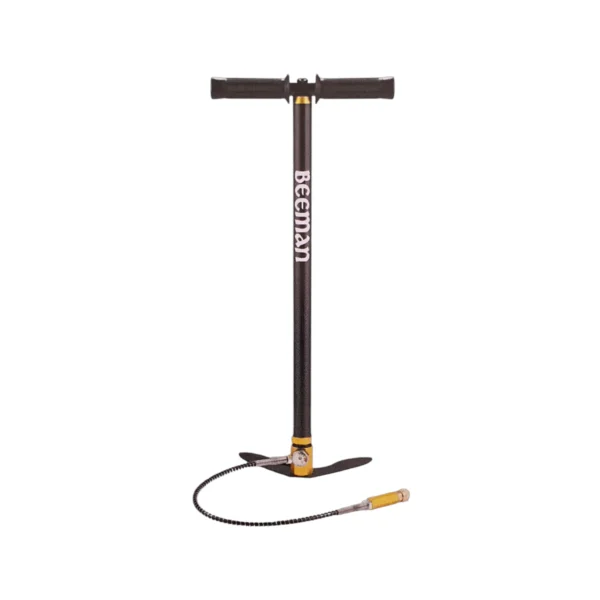





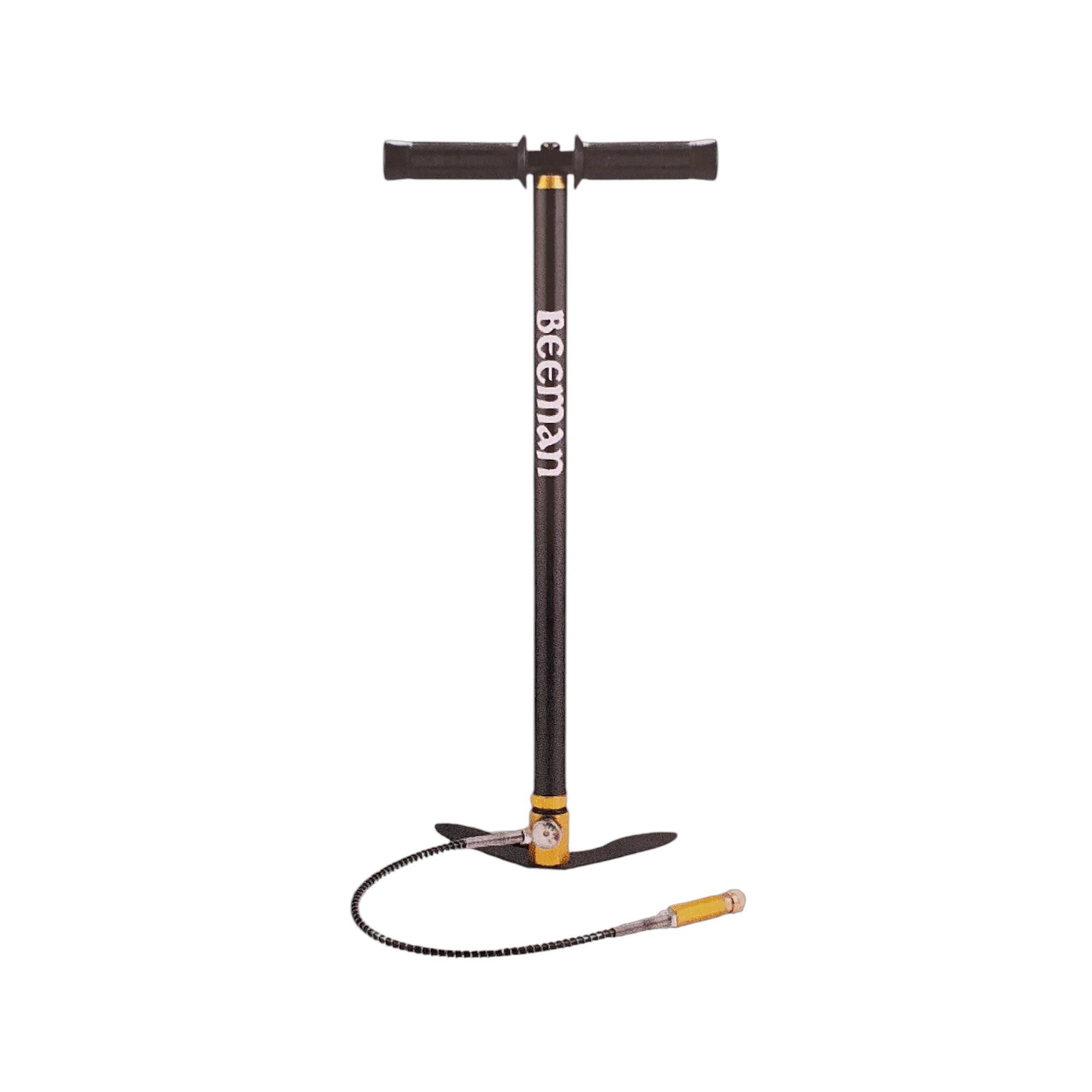


Beeman 6600B PCP Pump for High-Pressure Inflation
The Beeman PCP Pump 6600B is a 3-stage high-pressure hand pump designed for inflating PCP equipment. Its 594 mm closed length extends to 1072 mm when open, providing the pump’s full operating length while remaining relatively compact for storage when folded.
The Beeman PCP Pump 6600B pump weighs 2 kg and incorporates a folding base plate. A selection of replacement sealing components is also included, allowing common wear or sealing-related maintenance to be carried out when required.
Three-Stage High-Pressure Pumping System
The Beeman PCP Pump 6600B uses a 3-stage high-pressure pump configuration. The supplied working-pressure specification is 300 bar / 4500 psi.
Important pressure information: This product list both a working pressure of 300 bar / 4500 psi and a maximum pressure of 300 bar / 4000 psi.
Folding Base Plate
A folding base plate is incorporated into the pump design. The base provides the platform used while operating the hand pump and can be folded when the pump is being stored or transported.
Pump Dimensions
The Beeman PCP Pump 6600B measures 594 mm when closed and 1072 mm when open. The difference between the two dimensions reflects the pump’s extended operating configuration.
Replacement Sealing and Maintenance Components
The Beeman 6600B is supplied with several replacement components for servicing the pump. These include high-pressure sealing rings, piston rings, O-rings and one-way seal balls.
The included components are particularly relevant when troubleshooting symptoms associated with air leakage, worn seals or valve sealing.
Included Accessories
The following components are supplied with the pump:
- 2 × high-pressure stem sealing rings
- 2 × high-pressure piston rings
- 5 × O-rings
- 2 × outer tube piston rings
- 2 × low-pressure piston rings
- 2 × inlet-hole one-way seal balls
- 1 × Allen spanner
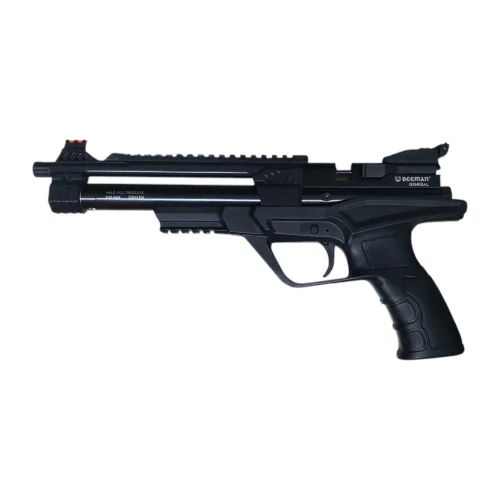
Browse our range of PCP Pistols & Rifles
Beeman PCP Pump 6600B Specifications
| Specification | Details |
|---|---|
| Brand | Beeman |
| Model | 6600B |
| Product Type | PCP High-Pressure Hand Pump |
| Pump Stages | 3-stage |
| Working Pressure | 300 bar / 4500 psi |
| Maximum Pressure | 300 bar / 4000 psi |
| Length Closed | 594 mm |
| Length Open | 1072 mm |
| Weight | 2 kg |
| Base Plate | Folding |
| High-Pressure Stem Sealing Rings | 2 |
| High-Pressure Piston Rings | 2 |
| O-Rings | 5 |
| Outer Tube Piston Rings | 2 |
| Low-Pressure Piston Rings | 2 |
| Inlet-Hole One-Way Seal Balls | 2 |
| Allen Spanner | 1 |
Maintenance and Troubleshooting
The Beeman PCP Pump 6600B includes replacement sealing components intended to assist with maintenance. Some common operating problems can be associated with gas leakage, valve sealing, contamination or insufficient lubrication.
Pressure Gauge Shows Little or No Increase
If the pressure-gauge pointer does not change, or changes slowly after prolonged pumping, the supplied troubleshooting information identifies gas leakage as a possible reason.
One stated test is to place the relevant pump assembly into water to identify the leakage point. The supplied guidance notes that, generally, a 0.5 L standard container can reach approximately 200 bar after around 420–450 pumping strokes.
Pump Becomes Difficult to Pull and Automatically Sucks Back
If the Beeman PCP Pump 6600B becomes heavy to pull and automatically sucks back towards the end of the pumping action, the supplied troubleshooting information identifies a possible problem with the level 3 piston set.
The stated procedure involves opening the bleed valve, removing the outer tube and the connecting screw at the top of the pump barrel, and filling the tube with water or silicone before reassembling the pump. The pump can then be rapidly and continuously inflated without a container or test plug to remove debris from the valve.
If the problem remains, the level 3 piston set can be taken apart to investigate the leakage or the relevant O-ring can be replaced.
Pump Pulls Light but Pushes Heavy
If the Beeman PCP Pump 6600B pump pulls lightly but becomes heavy when pushing, or automatically runs upward, the supplied troubleshooting information identifies the base-plate check valve as a possible cause.
The check valve may not be sealing correctly, may be damaged or may have debris obstructing it. The stated solution is to open the base-plate check valve using the appropriate special spanner, clean it, or replace the check valve if necessary.
Pump Becomes Progressively Heavier
If both the pulling and pushing actions become increasingly difficult, the supplied troubleshooting information identifies a serious lack of oil as a possible cause.
Silicone is specified in the supplied maintenance guidance for lubrication and maintenance.
Pressure Gauge Does Not Return to Zero
If the pressure-gauge pointer does not return to zero, the supplied troubleshooting information identifies oil that has not been drained completely as a possible reason.
Pressure Gauge Requires Replacement
The supplied troubleshooting information also describes a pressure-gauge problem involving oil expansion when pressure reaches 20 MPa, potentially causing instantaneous pressure to reach 40 MPa and creating an overload or heavy shock during transportation.
The stated solution for this condition is to replace the pressure gauge.
Reviews
There are no reviews yet